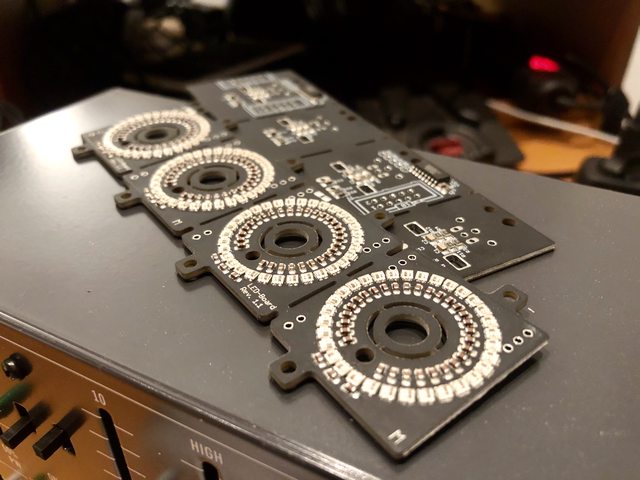
LRE 4x1 breakable RGB LED-Ring/Rotary-Encoder PCB bulk order

6 minutes ago, FantomXR said:

 going down with the LED-count while keeping the diameter as is now.

haha man i keep coming back to that solution but i wanna try everything first to avoid it. i know i wanted 32 LEDs to start out with, but now that i got used to the higher resolution, i’d miss it. if i keep the same 5 bottom LEDs covered which i have to, it would only be left with a real life resolution of 26-27 LEDs… shoulda went with 0603 APAs maybe lol


seriously though, we might have to walk the 32 LED way.. give me a couple more days.

Impressive work!

The WS2812 driver was only a quick hack, I was already satisfied after it was working and haven’t expected that somebody would ever drive more than 50..100 LEDs.

It shouldn’t be a big deal to optimize the memory consumption. There are various places in MIOS32 where I already used DMA double buffers (e.g. I2S audio output). Nothing needs to be explored, just translation :slight_smile:

Best Regards, Thorsten.

Hi guys,

I don’t know the best for your project but I can explain what I did for the OLRE16.

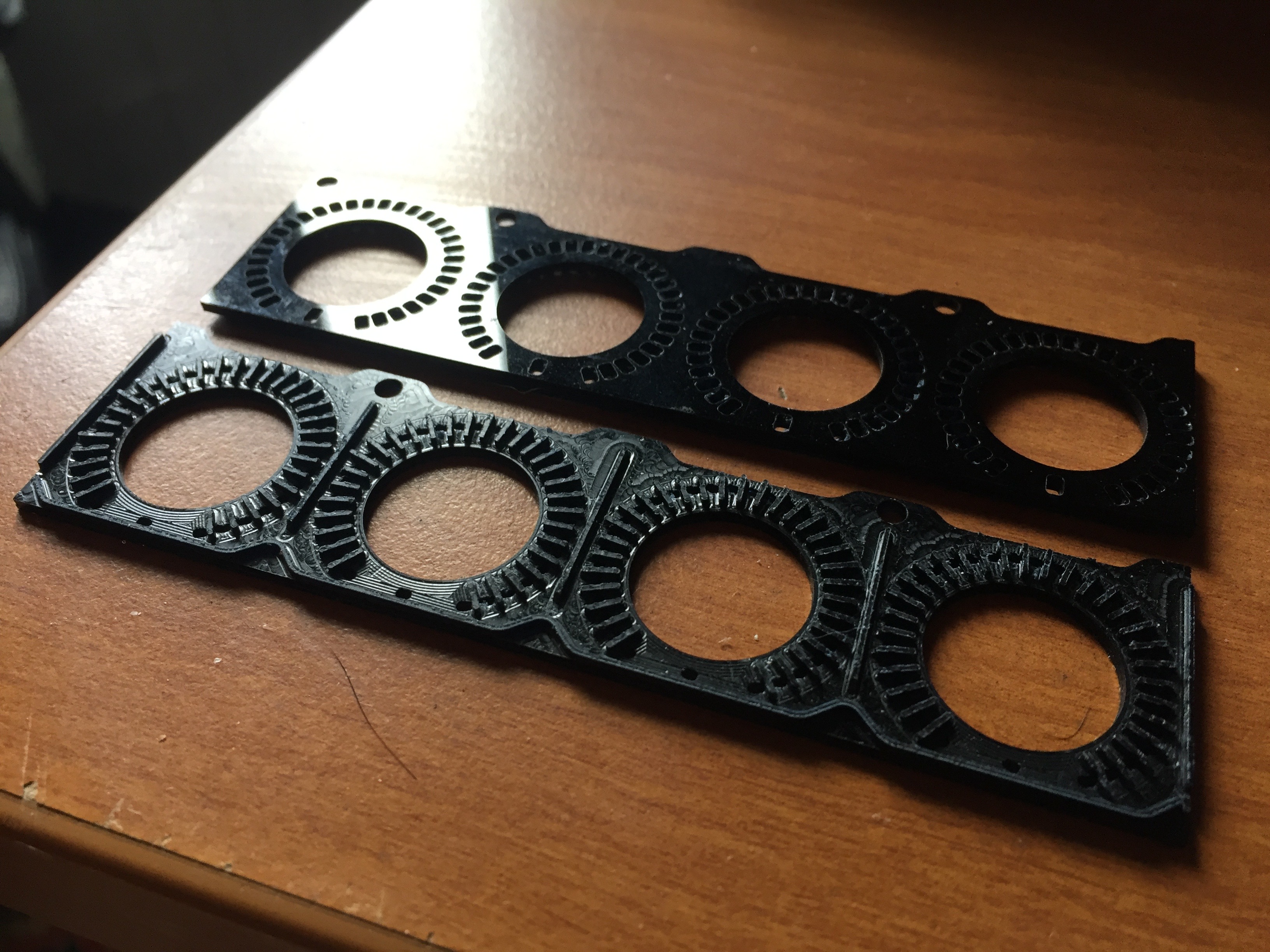
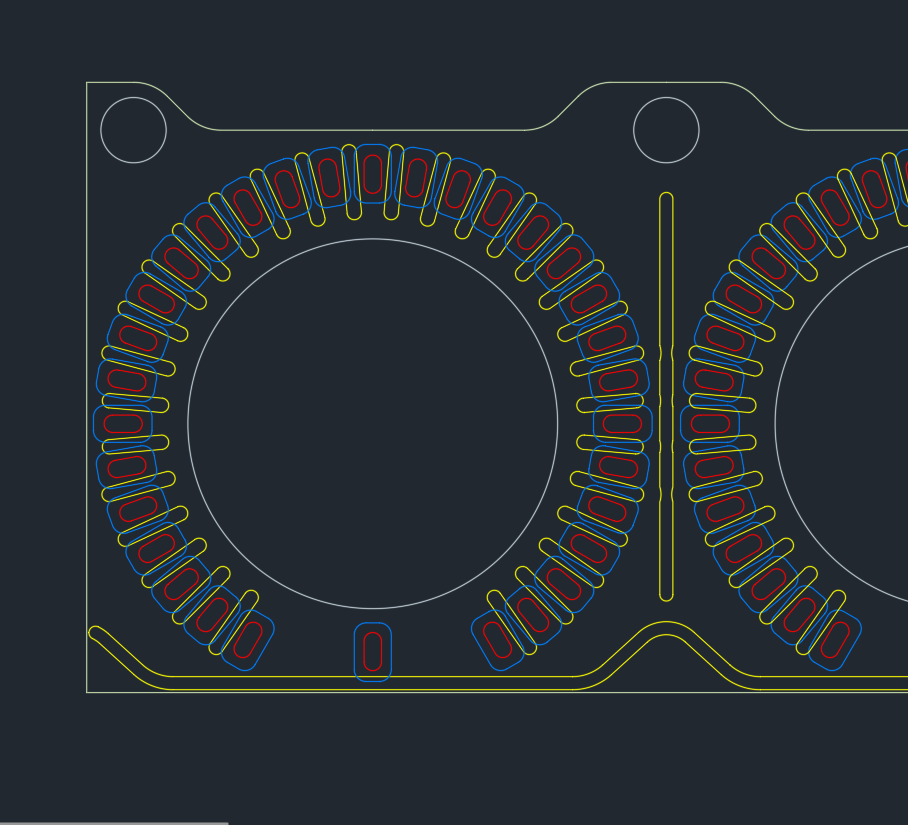
First is the MASK, it’s black PMMA.
Both sides are milled.
I let some space between the leds on the pcb to keep some matters between the leds housing. Led size is 1.5x2mm

On the other side(front side) there’s some stripes which will fit inside the translucent PMMA, they will block the light between the leds, between the rings and between the rings and the oleds. .
Note: the olre16 top pcb(ring) has no component on the top except the leds and the oleds.

In blue are the back leds housing.
In Red there are the holes.
In Yellow, some stripes to block the light on the front, those stripes will fit inside the back of the translucent PMMA.

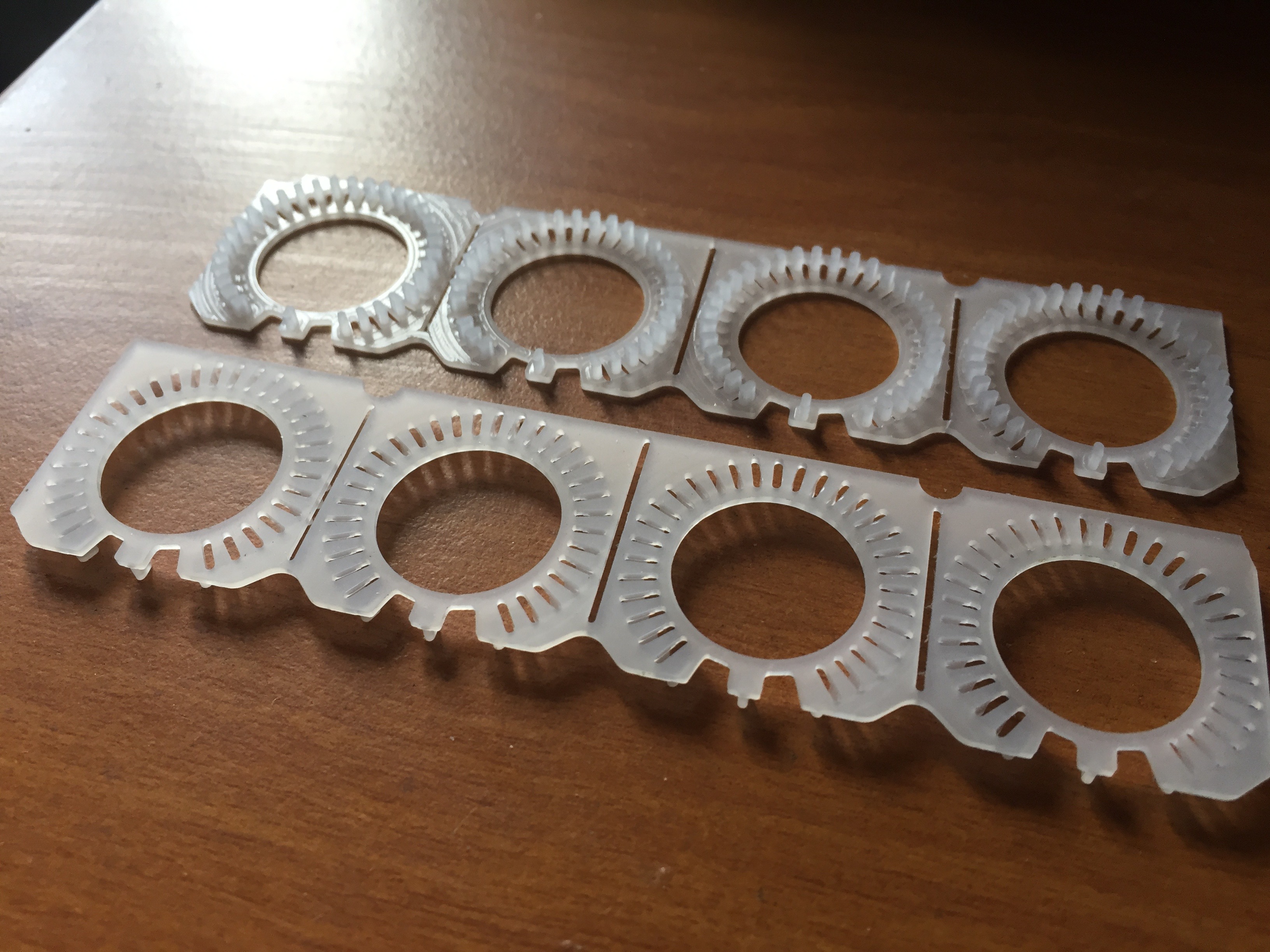
The second part is the ‘WINDOW’ , in translucent white PMMA, it’s a LED special one, the same I used for the beat led window of the Seqv4+.
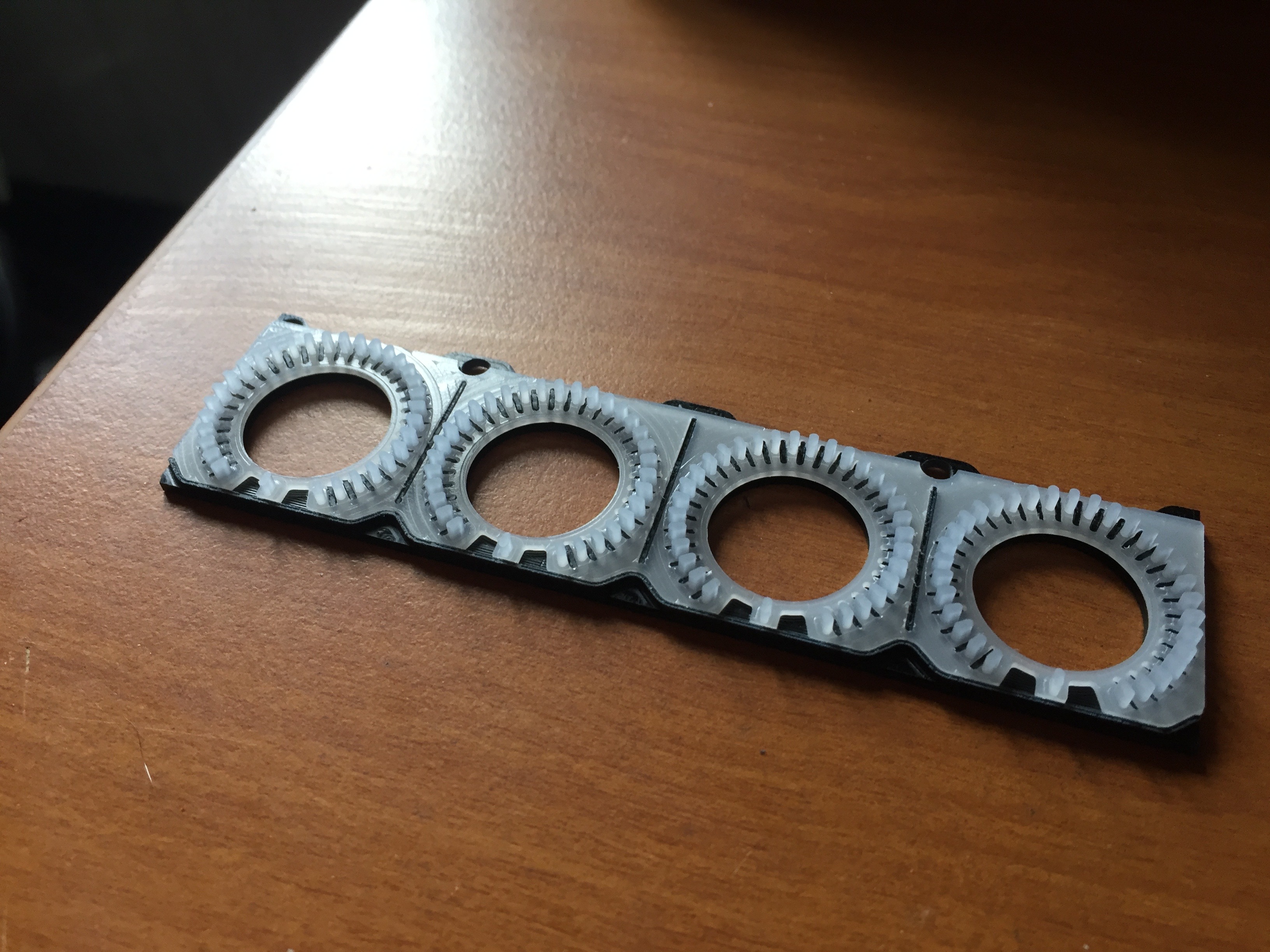
The back part will fit inside the MASK, in other word the base of the WINDOW will receive the MASK’s stripes, of course the WINDOW’s pipes are in front of the MASK’s holes.
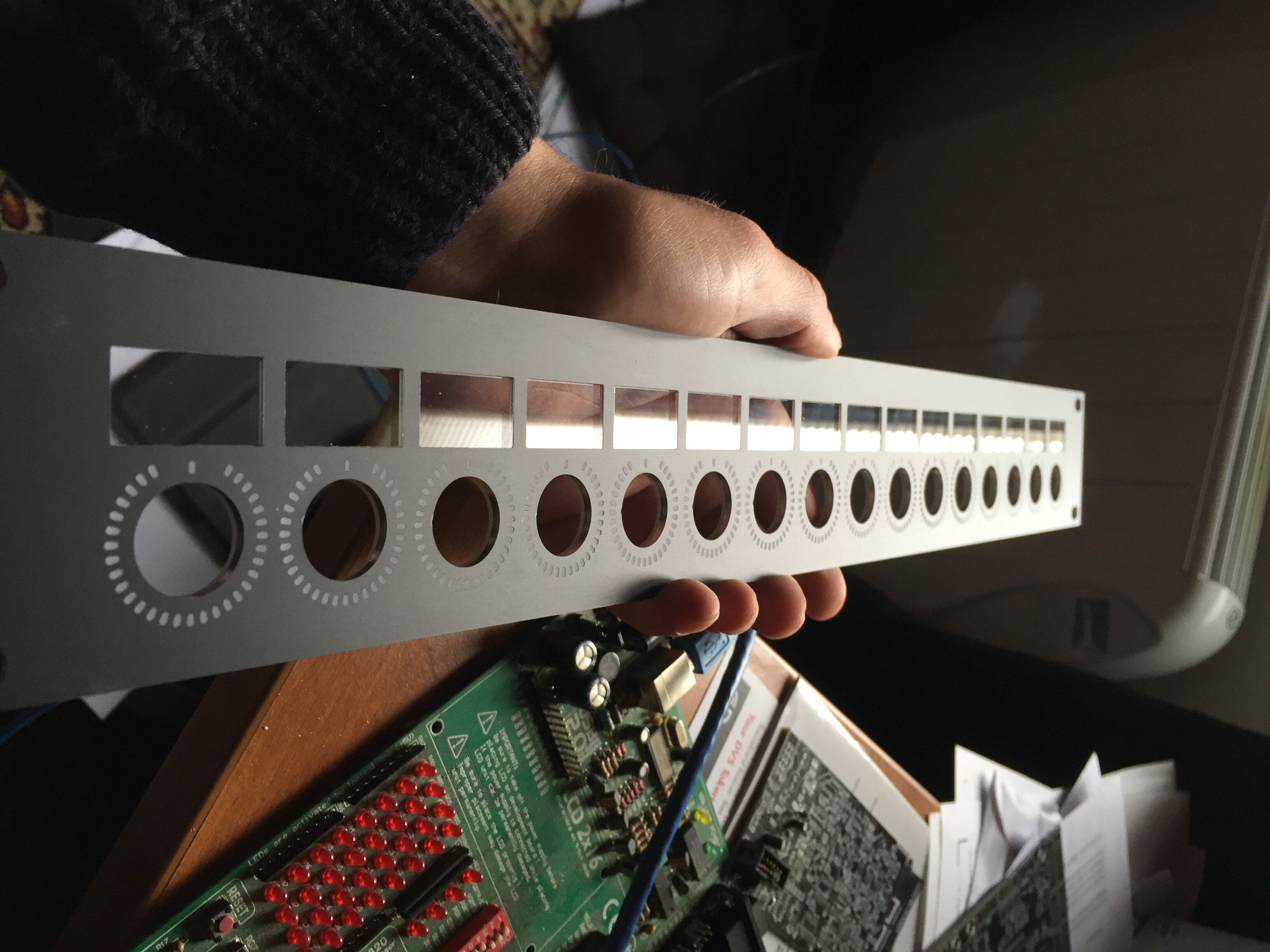
Then the Aluminum front panel comes to finish blocking the light and the pipes of the WINDOW will fit inside the panel, flush the surface.

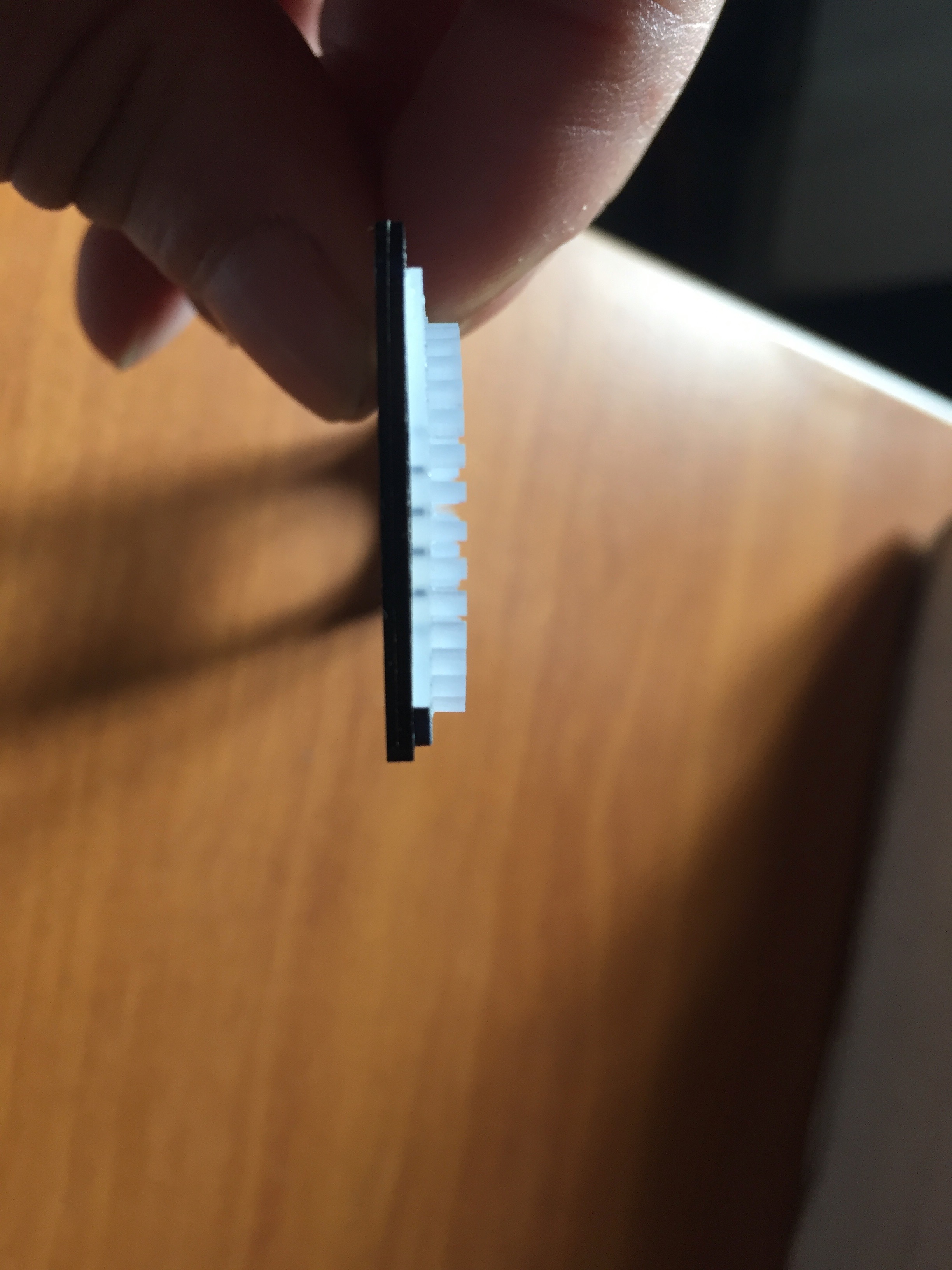
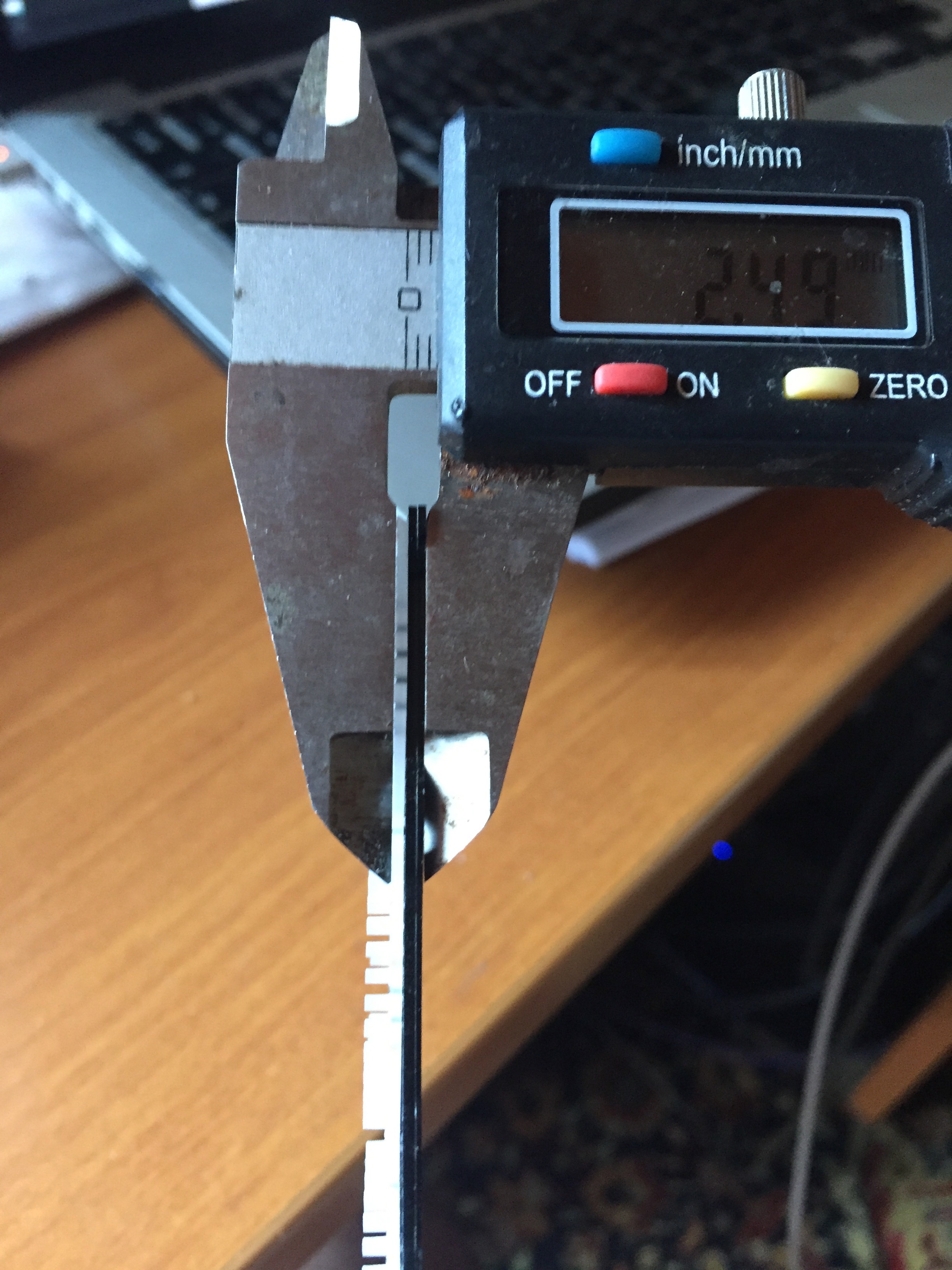
When they are coupled

When coupled , assembled the thickness without the pipes height(front panel thickness) doesn’t exceed 2.5mm

Voilà! I don’t know if it will help you and It’s surely an “over-engineered” thing but this is the only solution I found, and it works.

Best regards
Bruno

2 Likes

3 hours ago, TK. said:

It shouldn’t be a big deal to optimize the memory consumption. There are various places in MIOS32 where I already used DMA double buffers (e.g. I2S audio output). Nothing needs to be explored, just translation :slight_smile:

That sounds great! And… are you willing to do so? :-D 

Awesome work . Looks fabulous. Could you tell us where you have the translucent PMMA from? I buy my materials at TroTec. They have also awesome stuff! 

Yep it is the Troglass-Led from Trotec.

6 hours ago, FantomXR said:

That sounds great! And… are you willing to do so? :-D 

It’s unclear if I should really spend some more time to work on this.

If I understood  correctly, he sees a path via Arduino based solutions which he would prefer. In this case my contribution wouldn’t add any value… just follow him.

Best Regards, Thorsten.

If I understood him correctly he wants to avoid the Arduino solution. It will make things a lot more complicated. But an Arduino can drive tons of LEDs without problems. That’s why he uses it. 

Let’s see what he says :slight_smile:

man that finished frontplate looks so incredibly amazing, insane job, congratulations again. what kind of router & bit did you use to mill the PMMA? not sure the CNC at my fablab is fine enough.. not only are my measurements a good bit smaller but also i start realizing the laser cutter with its convexed cutting edge is not really precise enough for light channels like that.. so the biggest issues of translating your approach would be the holes in the black MASK layer, or rather the walls between the holes. i did some quick maffs, if we go 36>32 that will give me an additional width of the radial gap between each of the LEDs of 0.2-0.3mm, at the smallest most inwards point. so almost double what it is right now, i would have around 0.5mm at the smallest point which should make the masking much easier. might still have to CNC and not laser cut. oh and trotec FTW, they were the easiest and nicest to deal with too. innograv almost didn’t take my business lol.

oh bruno if there is any chance you have some pictures of the MASK and WINDOW layer combined with the LEDs stuck through? or any more close up/side shots of the all-layer frontplate. that would be formidable oui oui.

i ordered a bunch of different epoxy/milliput/sealer combinations too though and still wanna try just casting/filling the whole 0.84mm height around each LED. anybbody ever tried filling frontplate LED holes with epoxy or similar?

EDIT: epiphany? what if i make a silicone negative of the fully assembled LED ring board, and then cast a theoretically perfect resin/epoxy mask from it? where do i learn about this haha. oh wait. i need a double negative casting shape. prolly all too much effort, i wanna make music not get into plastic manufacturing.

also i will try some ready made light pipes - anyboby has a good source for those? mouser etc start at 50ct/piece for the 1mm ones, that would be 70EUR per 4x1 board lol. have some regular 1mm and 1.5mm optical fibre cable coming too but i assume that will be hard to cut to size precisely and make it perfectly flush with the frontplate?

made some more lasercut cardboard masks last night, i think they came out better but probably not perfect. will test and report tonight.


thanks, yeah i somehow was sure you would consider expanding the code after we approached this barrier… i know you’d do that “im schlaf” basically. but here’s my opinion: other than RGB LED rings probably nobody would ever want to connect that amount of WS2812 to a midibox. i personally would LOVE to be able to avoid the extra arduino, i just went there lacking an easier alternative, i didn’t prefer it at all! so of course, midibox support would be great, but if i understood it correctly you want to reduce the amount of work you personally put in on midibox, and given that, i am also not sure if it is worth your time to work on this this driver. maybe you should save your much appreciated midibox time for someones more urgent problems? would love to hear other people’s opinion on this. cause on the other hand the WS2812 is such a stable in the DIY world by now.

i’d very happily send you whatever display/mapping/ring-style code i have if you end up doing something. for you to laugh at, delete and redo properly.


EDIT 2 i can’t stop staring at your frontplate bruno haha so beautiful you need to sit your ass down and finish these.

 

46 minutes ago, weasel said:

what kind of router & bit did you use to mill the PMMA? not sure the CNC at my fablab is fine enough

All is made with my cheap and Chinese CNC, but it’s a solid one with powerful motors, after it’s a question of production and method…
…For example, to mill both side of the mask you have to think how you will reverse the material in the exact symmetrical position etc…
I use 1 tooth bit from 0.8mm to 2mm, speeds depend on the plastic you use, best is cast acrylic. I always use water+soap it avoids plastic melting(not sure of the English word), I put some every 5min with a syringe.
 

46 minutes ago, weasel said:

oh bruno if there is any chance you have some pictures of the MASK and WINDOW layer combined with the LEDs stuck through? or any more close up/side shots of the all-layer frontplate. that would be formidable oui oui.

Everything is disassembled, out of dust in a closed box, I will not work on this for the moment, sorry.
 

46 minutes ago, weasel said:

anybbody ever tried filling frontplate LED holes with epoxy or similar?

Yes I experimented that, with epoxy, I don’t know if I used the right method but this was difficult and not a good result. this kind of operation needs the precision of a machine, to respect the right dose with repetitive same movement. By hand  with a syringe I put too much in some holes, not enough in others, difficult to protect the front plate too.


46 minutes ago, weasel said:

EDIT: epiphany? what if i make a silicone negative of the fully assembled LED ring board, and then cast a theoretically perfect resin/epoxy mask from it? where do i learn about this haha. oh wait. i need a double negative casting shape. prolly all too much effort, i wanna make music not get into plastic manufacturing.

lol, yes I also thought to adapt a syringe dispenser to my CNC, a lot of work for an hypothetical result :slight_smile:

thank you so much, great advice! will get back later with results and thoughts! i’ll order some troLED and get that fablab CNC going..


what do you think about the idea of just casting 0.84mm (LED height) of black resin or epoxy directly on the LED PCB, to surround the LEDs and thereby cover the sides, only leaving the top side open? either cast a thin liquid expoy or use something more gluey pasty and press it in/scrape off the top? i think the direct 90 degree side-to-side bleed between two neighbouring LEDs is my biggest culprit right now.


edit: what router bits are you using? dremel/proxxon stuff? i assume you run through a lot of them, breaking? any recommended brand?

You can maybe reduce the angle.

by hand :wink:

Ok guys, was away for a bit on family duties, here’s the final update before I put in the order within the next 2 days!

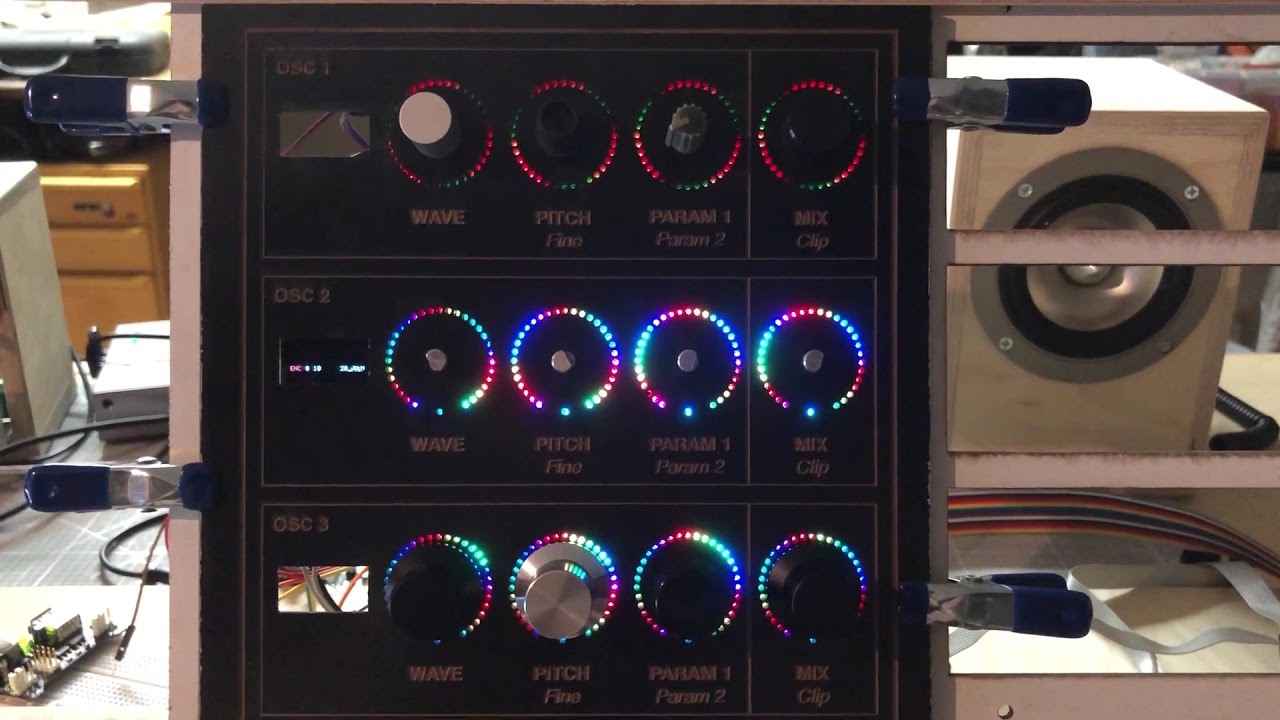
I had change the LED Ring design to 32 instead of the prototypes 36 LEDs. That’s what I originally had planned too, for three reasons: 1. easier mathematical mapping of n^2 values 2. Better usage for rhythmic/timing use, ie. a 32 step circular sequencer (think Euclidean Circles module) 3. More space between the LEDs for possible masking solutions. The diameter of the ring will remain the same at 33mm. At the classic 80% perimeter encoder use (as shown in the demo videos with the bottom 5 LEDs blacked out), you will now have a 27 LED resolution instead of 31 on the prototype.

The LED cross bleed which I was worried about for a while should be no issue with this updated version. Even without any masking or light pipes it is not that bad as you can see on all the demo videos. With the new LED distance it is quite easy to mill or print a little plastic masking ring if you want. And simple light pipes, even just hand cut from optical fibre, improve the quality a lot too. I will post pictures and videos of my results soon, but probably not in time before the order.

Added SMD solder point for an optional power supply capacitor at the power supply pins of each LED board.

Using WS2812C 2020 LEDs for much lower power consumption than the B variant.

Added some extra pinouts on the encoder board for more efficient use of the 74HC165: on the prototype each 165 was filled with the 6 pins of two switchable encoders, wasting the 2 remaining pins. Now all 8 pins of the 165 have unique TH-solder points so empty pins of the 165 can easily be used for additional buttons. Eg. You can now connect 2 switch-less encoders and 4 pushbuttons to the same 165, or 1 switchable encoder and 5 pushbuttons, twice that per encoder PCB.

Added a TH-solder point for the 165 Clock Enable pins so the boards can be used with bitbanging protocols instead of SPI only.

Unfortunately due to some family emergencies over the last weeks I was not able to finalize the design in time for the afore mentioned manufacturer discount. I still managed to get a decent offer, and so far group orders including my own demand are at around 160 sets. That gives the following prices:

Net manufacturing cost per fully assembled PCB set: 19-21 EUR (depending on the final numbers)

Import taxes (VAT of 19% for EU, tbd for US and other countries) around 4 EUR per set

Individual shipping to you (tbc, but probably 5-10 EUR per shipment, depending on destination country what shipping insurance etc you want)

That equals to a roughly estimated overall sum of 30 EUR for 1 set, 50 EUR for 2 sets, 90 EUR for 4 sets, 170 EUR for 8 sets. plus/minus 5% i guess.

This isn’t cheap but I am 100% sure it still is really good value for what you get. It’s around the same price you pay for one single ALPS rotary encoder with a single color LED ring.

The price is for a set of two PCBs, one with 4 RGB LED rings, and one for 4 rotary encoders. All SMD parts and the assembly is included, the actual rotary encoders and any through-hole solder pins are not included. Might be able to supply standard Bourns PEC11L if needed.

I personally pay about 7 EUR more than this for every set, in my personal development/protoyping costs. So if you feel generous and support the cause, the net price per board would be 25-26 instead of 19-21 if I distributed the dev costs equally.

Order will be put in this week, production and shipping will take approx 2-3 weeks, and then another week for testing and further shipping on my side. Expect it in your mailbox end of july.

Also I am talking to a very popular US based modular DIY supplier who will eventually stock some boards in his webshop. Will confirm asap, pricing tbd.


And a summation of what I think is important information:

This is a non commercial group buy of a pcb board. You buy the pcb board with all the SMD parts and assembly and nothing more. Of course I will take full personal responsibility in case something is fundamentally wrong or not working at all with the final product, based on a design mistake on my end. But other than that that’s all you get. No official support, no guarantees etc etc.

That being said: I designed these for the MIDIbox platform originally and I also successfully tested and use them on Arduino boards and the Axoloti platform. They work perfectly. I will write basic functions and objects for all these platforms over the course of the next weeks and of course I will share all these with everybody. Also basic general control for ws2812 LEDs and 74HC165 rotary encoders is readily available for all platforms already. I’ll also throw together some basic quick start guides and assist with connection set-up problems, but I expect anybody getting in on this order to be able to set up their own serial communication on the right pins of their respective controller boards. Expect a hardware protocol limit of around 500 LEDs (3-4 4xLED boards) per serial line if you want to maintain a 60Hz refresh rate, as with any WS2812 application. Also the obviously the more 74HC165 you chain in series, the higher the latency will get.

Both those programming libraries and the PCB design will be open sourced at some point. I don’t know when because I don’t want to do a half assed job on that and proper cleaning/optimizing and documentation might take a while.

You will have to buy and solder your own rotary encoders. The boards are designed for and tested with the Bourns PEC11 and PEC16 range, I personally recommend PEC11L low profile encoders. The optional LED board SMD power input cap would have to be self supplied and hand soldered too but in most cases will not be necessary.


So yeah that’s about it. If I didn’t scare you away by now, please RSVP as soon as possible. Either here via a private message or via email at rgbledring at gmail dot com, then we can exchange personals and discuss details.


Also, in extremely exciting midibox news, a very special someone decided to start redesigning and expanding the WS2812 drivers. I will post updates as soon as we did some testing!

Alright, everybobdy stop whatever you are doing right now and gather to see what granddaddy Klose blessed us with: a little tease of the all new extended and improved WS2812 midibox driver:

Gaze at currently 432 WS2812 controlled by a single J4 serial pin!


The updated boards finally arrived! will do some tests over the weekend and report back next week!

1 Like

Ok so here’s a summary:

  • Production run arrived and is working perfectly fine. Looks amazing too.
  • Breakable LED PCB with 4x32 ws2812 2020 LEDs, 3 pin connectors
  • Encoder PCBs with 2x 74HC595 and 4 encoder slots
  • Additional test points on the encoder board for 4-8 remaining 74HC595 channels, for use with additional buttons etc. 4 or 8 depends on whether you use encoder with ir without switches.
  • Net price per set (1 LED PCB, one ENC PCB, you need to buy & solder encoders and connectors everything else is assembled) 22 EUR
  • Add shipping cost to that. I am shipping from Europe. Within EU, around 4 EUR uninsured, 7 EUR insured. US shipping tbd. I could ship them from the US end of october.
  • If you need a business invoice, add 19% VAT.
  • I will reach out to everybody who showed interest. I have a small amount of extras so hit me up on this forum via DM or via mail rgbledring at gmail

I’ll post some more pics and details on my experiences and mounting options asap. As I described in earlier posts, these are supposed to work with all major embedded platforms, specifically Arduino, axoloti and midibox. But you are only buying the hardware from me, no guarantees, no software support etc etc etc. The Encoder boards were originally designed for the midibox platform so they come with a 10pin IDC connector slot. I will provide pinout and schematics to buyers of course.

What is the status of the bulk order. Is it still open? I’m very interessted.

The bulk is closed. But you could contact weasel via PM. I’m sure he has some pcbs left.  

I got some PCBs - hurray! :slight_smile:

And while testing them, I found a bug in the WS2812 driver, which falsified the colours, and also influenced the colours of other LEDs - a very stupid one!

Here an updated version: http://www.ucapps.de/mios32/midibox_ng_v1_037_pre11.zip

Best Regards, Thorsten.

hey yeah i have some left you can send me a message!


sorry for the absence guys, real life took control for a second. i’ll try edit this post with some updates tonight or tomorrow.


and thanks again thorsten, looking forward to trying the fixed driver - not that i noticed anything wrong haha..

I added some enhancements into the firmware to support RGB LED Ring Patterns: http://www.ucapps.de/mios32/midibox_ng_v1_037_pre12.zip

Usage example can be found here: https://github.com/midibox/mios32/blob/master/apps/controllers/midibox_ng_v1/cfg/tests/rgbled_3.ngc

Best Regards, Thorsten.