A precompiled test application is available in the MIOS Download section, and a schematic here
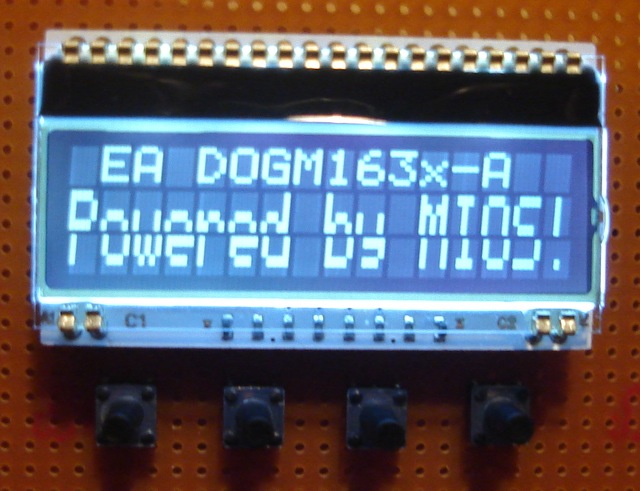
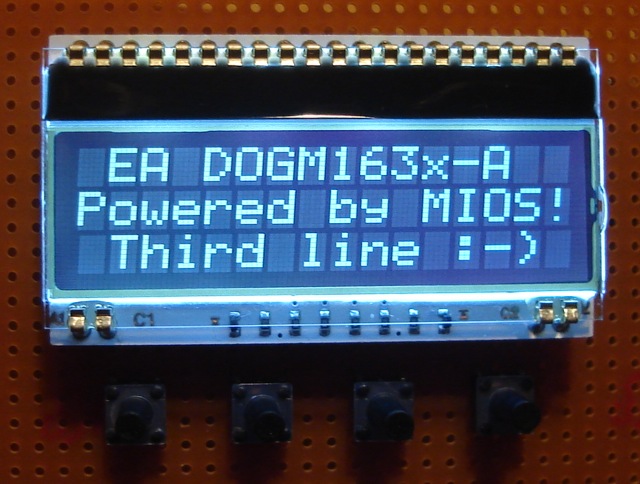
They are looking sexy, no?
And these are btw. the fastest LCDs I ever tested! (benchmark result: 1.61 mS!)
And the power consumption of the backlight is extremely low, so that the 7805 of a core module doesn’t get hot.
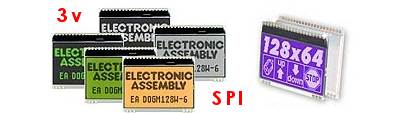
Backlight colour and display variant can be freely combined - just select the colours you like.
(I’m using a “EA DOGM163S-A” with black background, combined with the white backlight “EA LED55X31-W”
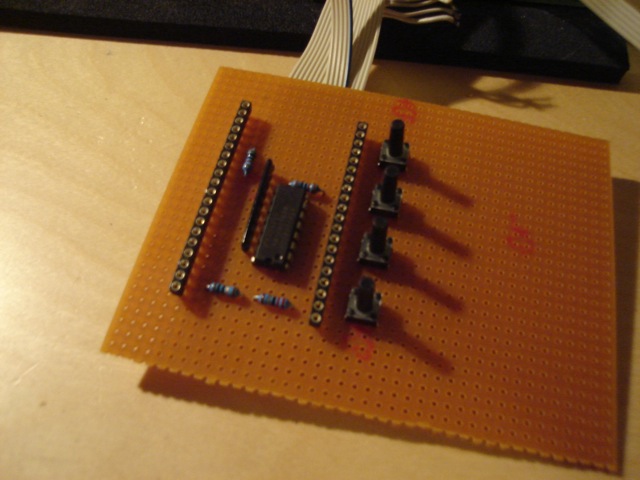
There is enough space under the LCD to stuff some additional components, like a “DINX1”:
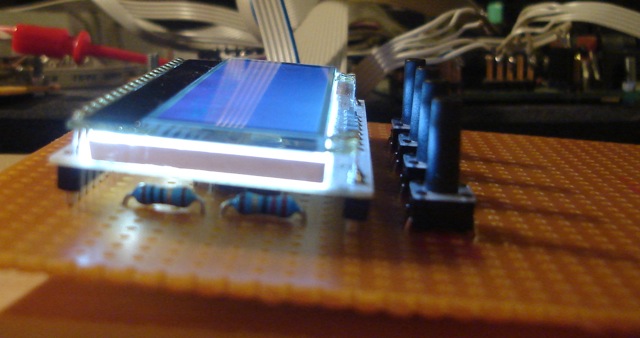
Sideview:
Only Drawback I’ve noticed so far: currently no displays with 20 characters per line are available - it would be the ideal solution for MBSID V2. And two displays could be combined to a 40 column display.
For applications which don’t rely on special sizes, like MB64, MB64E, MBCV, etc… these displays are recommented from my side to everybody, who wants to give his MIDIbox frontpanel a special touch
If anyone is interested, I have found a supplier in the UK called mmselectronics.
I also notice that there are also 128x64 and 128x32 graphic modules available now, it would be really good if they worked with MB, they use the sam SPI interface as the character ones so hopefully it is possible…
The one-off price for the 128x64 is £12.49 and £8.70 for the 128x32, you also need a socket which costs £0.84 and a backlight, £2.98 for amber going up to £14.18 for RGB!
The 3x16 character displays are also available at £5.14 each
I have now written a driver (well hacked one together) for these displays…
I have also written an SPI based driver for the 16x3 character LCD’s. Technically it should be possible to have up to 8 of either the character or graphic displays. I was thinking about looking at combining the two into one driver but I don’t think that MIOS allows mixing of GLCD/CLCD?
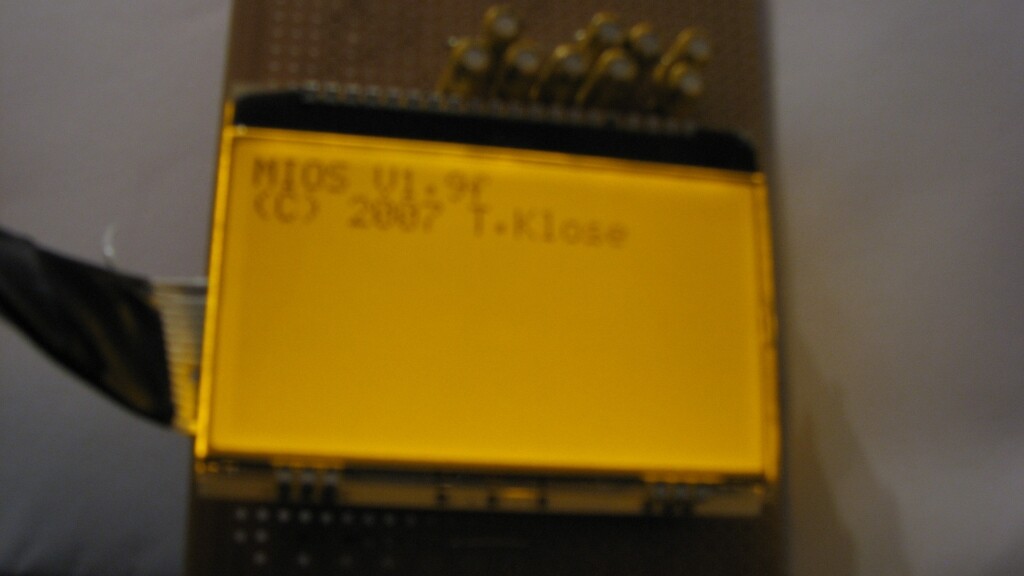
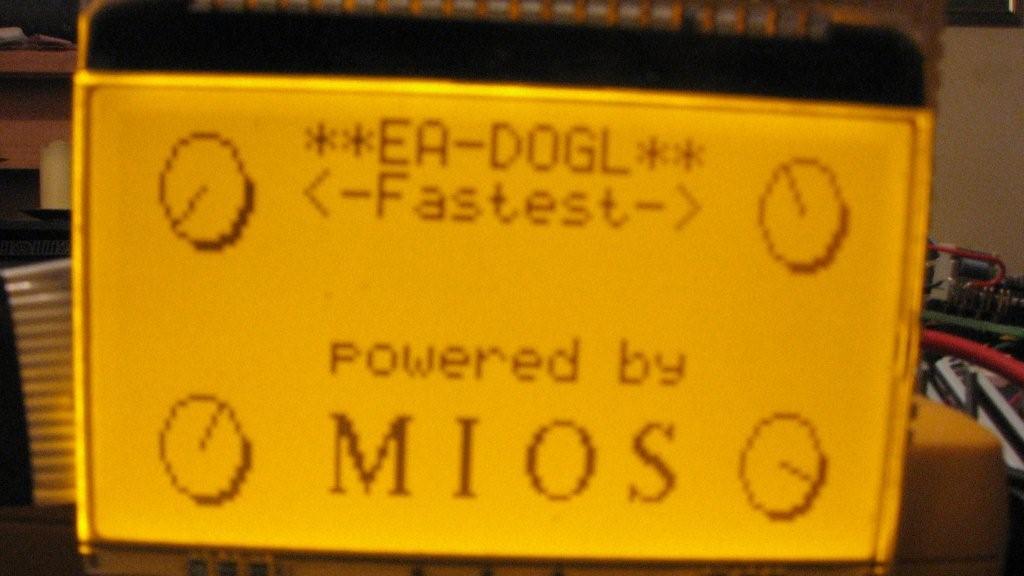
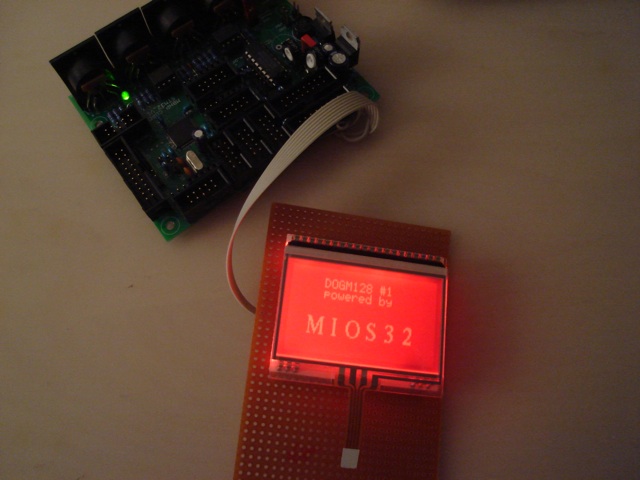
Anyway here is a picture of the GLCD, it is 128x64, I went with the amber backlight although there are many other options just like the CLCD version.
You will notice that it requires 8x 1uF capacitors, this removes the need for a high voltage supply for the LCD.
Once I have sorted out and tidied-up the driver, I will commit it.
Cheers
Phil
p.s. Apologies for the crap picture, I hadn’t realised how difficult it is to take a picture of an LCD!!!
I have also written an SPI based driver for the 16x3 character LCD’s.
I am still racking my brain to figure out how a driver that requires about 8 times the number of instructions to write the same data, can be faster? Buh?!

 This make nILS very happy, I’ve been waiting for this for too long! Awesome!