awesome, thx a lot, peter! i just ordered my “brain”-kit from smash-tv yesterday (?), so slowly, step by step and budget by budget it´s starting to get serious on my side. thx a lot for your tutorial, it finally made my decision to try to master this project. and of course i´ll ask you, when in trouble
12mm encoders vs 16mm encoders: This is fine but I HIGHLY recommend you have your enclosure/panel made at this stage so you can check the fit before soldering the parts in. Whenever you need to do lead yoga and eyeball what is a good fit, it’s a lot easier to check your work against the panel before you solder everything in place.
LEDS: Same thing, I never solder in LEDs without using the front panel as a template, yes it’s more work to mock everything up initially but way less work than going back to fix misaligned LEDs later on. Attach your standoffs, screw in the PCB with all the LEDs fitted in their holes, then solder them in..
Altitude: fully agreed - for a normal build, it is highly recommended to install the frontpanel as early as possible - to avoid problems later on.
For this build, brackets will be using a transparent acrylics frontpanel on top of the LEDs (shine-through - not through-hole), so installation is a bit easier.
Fortunately, the Alps EC12 encoders work fine on the SEQV4 CS when using DETENTED1 as an encoder type in the MBSEQ_HW.V4 configuration file. (They also work fine on fairlightiis LED-Ring boards).
Please excuse the confusion - my other SEQ V4 has a completely different key/button layout - hehe, hope you enjoy my slight navigation issues nevertheless!
Unfortunately, i lost forum/email contact with brackets - or he has lost interest in the sequencer, well that´s how it goes…
Edit: it has now been sold to “before” - thanks a lot and enjoy! Hope to see the MBSEQ in this thread, once it is finished!
Thanks for reading this thread, and for all your feedback!
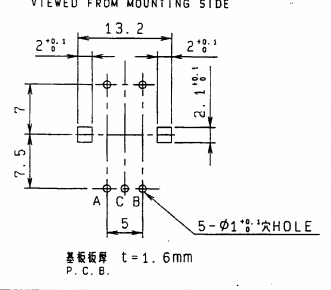
Step 8 contains two links to suitable encoders. The “pushable” 12mm encoders from Alps do need pinbending, though. It will fit with a bit of patience, but of course, 16mm encoders are easier to install. Am currently building a MIDIbox NG with these 12mm encoders and they work really well, also in 16mm slots, so nothing too much to worry about!
I think i just rotated the polarity protection notch of the socket, that was soldered on the backside by 180° and built a standard cable* - but I am not sure, it has been a while Note, that the pinout of the serial connection is also quite symmetric, that’s maybe why it worked. I remember to have thought about the step for a few minutes back then, and was convinced, it was fine
The LED #31 should be rotated, it is possible, that it lights up, when it is not rotated, but it will likely mess up the LED matrix and compromise other LEDs…
EDIT: * or built the cable with one plug 180° rotated
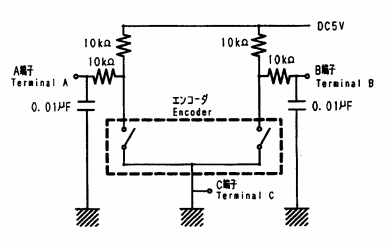
In some cases, the Alps 12mm encoders may need to have the middle and right pins (when looked at from above) crossed and DETENTED1 does not work properly. This operation can be done easily by clipping of the metal pins and soldering two crossed wires. Norbim1 was totally right!
The funny thing: No problems occur with the old LPC17 board. And it is quite usable with the STM32F4 board, but sometimes, the display “jumps back a step” after turning an encoder counterclockwise. Anyone, that has soldered in these encoders and is using DETENTED1 is encouraged to test it:
In the main menu, scroll right with the menu encoder, then scroll left. After reaching the leftmost menu point, sometimes, the cursor will jump back to the second menu item. If this is the case, a little soldering action solves the problem!
I’ve got some builds (e.g. old LPC17 based SEQ and the MBProgramma with Fairlightiiis encoder boards) working 100% alright with DETENTED1 and non-crossed 12mm encoder pins - somehow this works, as the encoder pulses are correctly recognized by MIOS.
But recently, I ran into slight (almost unnoticable, but present) problems with a STM32F4 and the MBSEQ. That’s why I remembered faintly norbim1’s statement from a while back, tried the “pinswap” and can now only give the general advice to build it correctly from the beginning