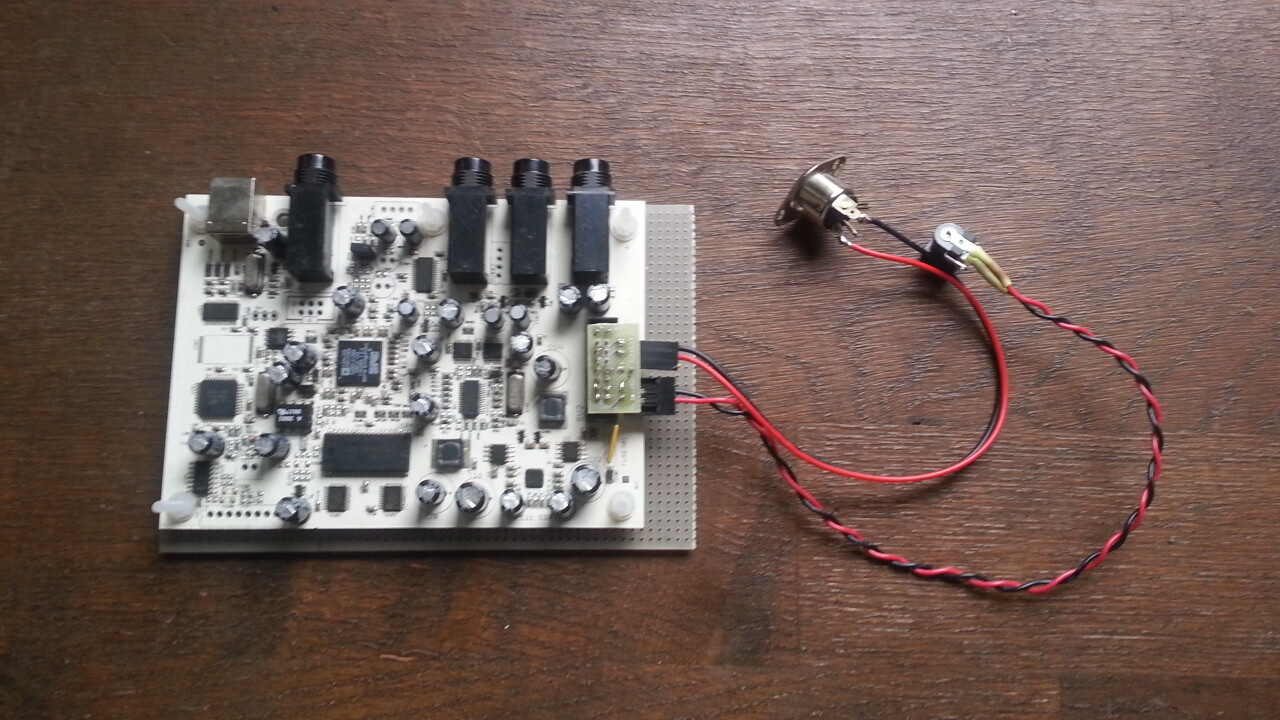
And after a long silence (being VERY busy with other stuff…), here are some news of the project to turn the ASX/X-Synth into an open DSP platform for music.
But first of all, I have to report some of the bad news about ASX/Plugiator : Use Audio is now completely dead and silent. The website is closed. It is now handled by a company who wants to sell the domain name to the highest bidder (I hate those companies who want to make money with “well known” domain names). Since Use Audio was the only source for Prodyssey, Pro12, FMagia and Drums&Bass plugins, the ASX is little by little getting the status of abandon-ware. Moreover, we tried to get in touch with inDSP in India, and the answer we got was “all developments of the ASX/Plugiator is completely stopped”
In other terms, the only available board is now the X-Synth from iCON, for which it’s very hard to get a clear status. It’s still existing on iCON website as an active product, and they sell it with 300USD off (see here https://www.icondigitalusa.com/shop/xsynth), but it seems out of stock. And at the same time, it can still be found on various places on the web, but with crazy prices (I saw some over 400 USD !!)
Software support from iCON is simply non-existing, since the software they provide is not even branded “iCON” but “Use Audio” (the name appears on all plugins in the Manager). That means that iCON does not even probably know that there are other plugins (and does not probably even want to deal with the licensing issues with inDSP)
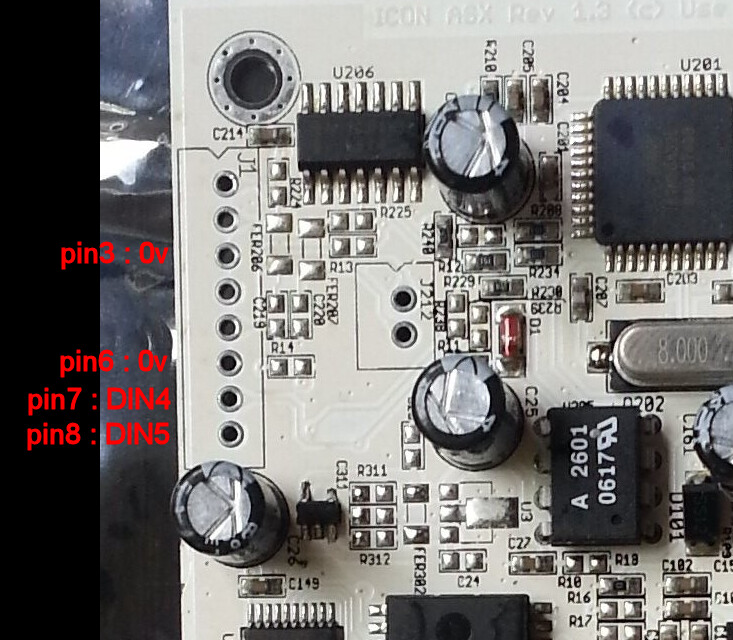
Now, the “good” news : after countless hours of experimentation on my ASX boards, I think I have finally found a way to inhibit the local microcontroller and be able to download DSP firmware directly from an external board through the SPI link. The process involves to solder two connectors on X-Synth boards (SV1 and SV3) and place a jumper on SV1. It’s also needed to solder a wire directly on U204 (pin 11) to get access to the SPI CS line to the DSP. Soldering this wire is quite difficult by the way, and requires serious soldering skills.
Apparently, inDSP has implemented a special mode in the ATMega32, probably for DSP debugging on something like that. This mode is activated by shorting pin 1 and pin 2 of SV1.
But take an extreme care if you start experimenting with that : shorting the wrong pin on SV1 will activate the ICSP mode (In Circuit SPI Programming) mode of the ATMega. That means that you can format the microcontroller Flash memory through the ISP connector!! And there is NO WAY to recover the ATMega32 program in that case (in other terms, your synth board will be DEAD!!)
I will post more details on the forum as soon as possible, but I think I am on a good way now.
Once again, if you decide to experiment with the DSP SPI link, note that you need to know exactly what you do and you take the risk of erasing the microcontroller memory in case of any failure.
In other terms : don’t tell me I did not warn you about risks